

Nobel Prize-winning author, Ernest Hemingway, once said:
Every man's life ends the same way. It is only the details of how he lived and how he died that distinguish one man from another.
These details can indeed be considered the essence of Personality, and have been summarized by Henry A. Murray and Clyde Kluckhohn, in their famous text, Personality in Nature, Society and Culture. Putting it all down in a nutshell, they state that: Every man is in certain respects: like all other men, like some other men,like no other man.
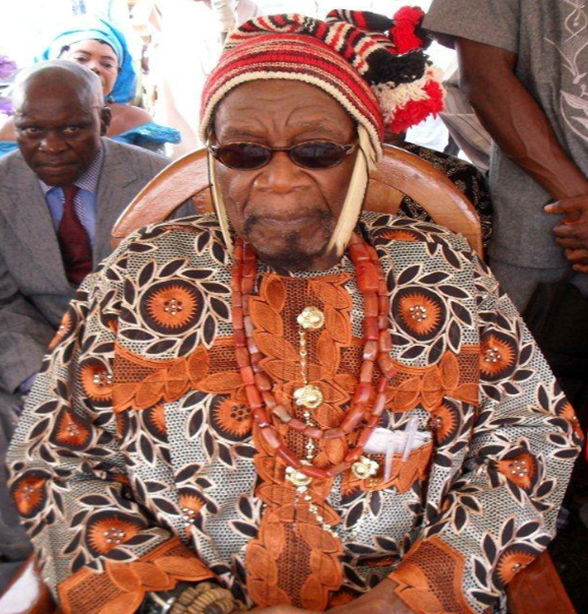
Professor Dr. Emea Okwara Arua distinguished himself, in many respects, in the third out of these three descriptions of humankind. A willful, patient, non-conformist,he was truly …a man like no other man.
Professor Dr. Emea Okwara Arua used the limitations he encountered in the course of his remarkable life, as stepping-stones to achievement of the goals he set for himself. He was a traditionalist who viewed all of humanity as one and believed in the equality of all peoples, regardless of race. He had a deep respect for the varied cultures of the world, believing each to be an important aspect of our universal social fabric. Professor Dr. Emea Okwara Arua respected everyone to whom respect was due, even the children, especially the children.
As a newborn, he was the answer to a prayer, and as a child, he was notable for his quick, inquisitive mind. As a pupil he was a rebel who questioned everything put before him by his missionary teachers, and as a student in Prague, Czechoslovakia, he distinguished himself in academic and intellectual excellence. As a civil servant and lecturer in Nigeria, despite the competition from the most brilliant academics in Africa, if not the world, his professional trajectory was always in ascent. As Ezeogo, the traditional ruler of Amaekpu, Ohafia, his reign was marked by revolutionary policies and pioneering innovations that repositioned Amaekpu in line with modern trends. As a brother, cousin, and uncle, he was the last defense, the unifying presence, the figurehead. And as a husband and father, he was a pillar of strength and a tower of wisdom, to the testimony of his immediate family.
Birth and Education
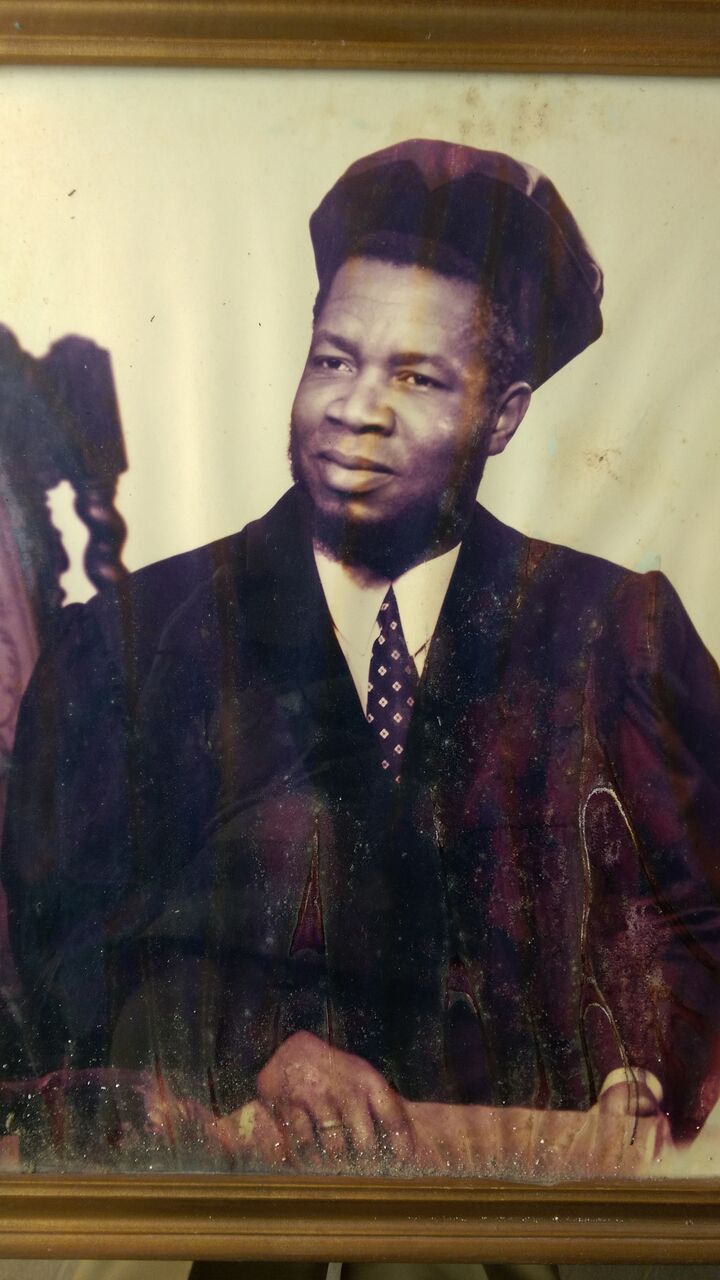 In the year, 1938, a gigantic 450-metricton meteorite exploded 12 miles above Earth’s surface, scattering debris in its trajectoryacrossthe Northern Hemisphere. This prodigious meteorite, which blazed across the sky for several miles, appears now in retrospect, to have heralded the groundbreaking and momentous events that would occur that year. For it was in March, 1938, that crude oil was discovered in Saudi Arabia. It was in 1938 that the photocopier and the ballpoint pen, also known as the Biro, were invented. And it was again in 1938, that a “Seeing Eye Dog” was used for the first time to assist the blind in their daily lives. In addition to all these substantial events which took place that year, HRTH, Ezieogo Professor Dr. Emea Okwara Arua, Ebube Dike Ekpudiogba Ofali Agwu III, was born to late Nna Sgt. James Okwara Arua and Madam Dinah Agbogocha Arua, both respectively of Ndi Edike and Ndi Nkole Compounds, Amaekpu Ohafia. He saw the light of this world at Ifiayong, in old Calabar Province, Cross River State; now Akwa Ibom state.
At the time of his birth, Calabar and the rest of Nigeria experienced increased taxation, an extreme measure imposed by the colonial masters of Europe as a means of reversing the Great Depression. Nna James, a member of the British Colonial Police force, and his wife, Nma Dinah, both of blessed memory, had two children at this time. Nna James had reached the zenith of his career; he was a sergeant- the highest police rank for locals at the time. This did not deter him and his dutiful, loving wife, Nma Dinah, from sending their third child, the young Emea Okwara Arua in whom lay destined, a professor and an Ezieogo, to both the Methodist School at Egwenga in Opobo, and to the Ohafia Central School in Elu Ohafia. In these schools the young Emea acquired primary education between the years 1946 - 1952.
As a pupil, Emea Okwara Arua was notably inquisitive with a sense for justice and fair play that made him a thorn in the side of his English missionary teachers. The most remarkable and notable observation of this era of his impressionable years was that he was not as easily impressed by his white teachers as one would expect a boy to be in that time of British colonization. Emea could never comprehend why his teachers did not abide by the same commandments they gave the local children in the classrooms. He could not accept the punishment of his fellow pupils by these missionaries who would beat them with sticks, even when they had done nothing to merit such severity. As a result, the young Emea was a fount of questions that troubled his teachers without relief, to the extent that he was suspended from school for a period. Emea would eventually read the entire Bible for himself, an uncommon feat at the time, to learn its doctrines for himself, in order to better contradict his teachers and counter their prevarications.
For his secondary education, Emea then attended the most reputable and distinguished industrial training center of that period and location- the Hope Waddell Training Institute in Calabar. In keeping with the Institute’s famous motto: In Spe Gloria Dei- In Hope of the Glory of God, the Scottish Principal, J. A. T Beattie, ran the institute when Emea was a student there, from 1953 - 1957.
These are some notable Nigerian personalities who also attended this great institute:
- Dr. Eni Njoku – Former Vice Chancellor of the University of Lagos and University of Nigeria Nsukka
- Sir Francis Akanu Ibiam – Medical missionary, Former Governor of Eastern Region, Nigeria
- EyoIta – leader of the Eastern Government of Nigeria
- Nnamdi Azikiwe – Nigeria’s first President
After obtaining his West African School Certificate/Cambridge, and graduating from the Hope Waddell Training Institute in 1957, the teenaged Emea travelled to Lagos, to his father’s relative, a director with the Prisons Division of the Federal Ministry of Internal Affairs. Lagos in the 60’s was an ordered and well-painted city with a smaller population, and more manageable traffic, than it has today. Emea did an apprenticeship in the Prison Division of the Internal Affairs Ministry, working first as a Third Class Clerk (Accounts), before being promoted to Acting Executive Officer (Accounts), between 1958 - 1963. During this period, the astute Emea also acquired his General Certificate of Education (A’ Levels) by correspondence, and obtained, also through correspondence, the Membership Grade, Grad-ICSA, at the Corporation of Secretaries Institute in London.
In 1963, then in his twenties, Emea’s entry won the first prize in the International Competition organized by Radio Prague, Czechoslovakia, on the essay theme: My Experience of Colonialism in Africa. He also applied that year, with his paternal cousin, the late Dr. Obuba Ndukwe, for the Czechoslovakia Government Foreign Aid Scholarship to African Countries for University Education. He was successful and was offered a place to study. Thus, at the age of 25, Emea left for Czechoslovakia to study Sociology and Co-operative Agriculture at the University of 17th November, and Charles University, both in Prague, Czechoslovakia.
The Czechoslovakia Emea met when he arrived in the year 1963, was one on the verge of a De-Stalinization process. This was a political exercise aimed at evolving the socio-economic structure of Czechoslovakia with reforms targeting the hardline communism that had debilitated her for almost two decades.
His arrival in the thousand-year old, historical city of Prague, and his initial studies at the University of 17th November, were periods of awkward strangeness for Emea. Though his lectures at the university were in English, all foreign students were required to study Czech for twelve months. After three months of study, Emea had mastered the language and he decided, quite practically, that he had had enough. His reason was simple. He had come to Prague to study Sociology and Co-operative Agriculture. His lectures were all rendered in the English language- the study of the Czech language was an unnecessary distraction. Without further delay, Emea complained to the university authorities, approaching them in the customary patient and reasonable manner that would remain a distinct feature of his personality. He explained that he had come for undergraduate studies at the university where the lectures were in English. He had not come to Prague to study Czech. Upon passing a Czech language test, which he was thereafter, made to take, he was then permitted exceptionally, to continue his studies without any further encumbrances. Emea acquired a Diploma in Social Sciences, eventually winning the Best Student of the Year Awards in the Faculty of Social Sciences in the years 1967 and 1968. He received the prestigious Czechoslovakia Fellowship Award in 1970, and in 1971, he won the Rector’s (or Vice-Chancellor’s) Prize for the best Ph.D. Student of the Year.
Emea Okwara Arua was an Honors Student in both his Master’s degree in Agricultural Economics, which he obtained at Charles University in 1969, and in his Master’s degree in Sociology, which he obtained at the University of 17th November, also in 1969. He scored distinctions in both his doctoral degree dissertations and the oral defence examinations. Emea was awarded a Ph.D. in Rural Sociology in 1971.
Return to Nigeria and Career
After receiving employment assurances from the University of Nigeria, Nsukka on his application from Czechoslovakia, Dr. Emea Okwara Arua returned to Nigeria in August, 1971. Unfortunately, upon his arrival at this dignified Institution founded by Nnamdi Azikiwe in 1955, he was not granted the assured position; the time of his arrival coincided with a change in the university’s administration. Professor Eni Njoku who shared with Dr. Emea Arua, the Hope Waddell Training Institute as his alma mater, was being replaced as the Vice-Chancellor by Professor Herbert C. Kodilinye. Professor Kodilinye, wary of hiring academics who had studied in foreign socialist countries, would not offer Dr. Emea Arua employment. Undeterred, the new doctor of Rural Sociology turned his attentions to the Ministry of Economic Development and Reconstruction in Enugu, and was offered employment. Between the years 1971 - 1975, Dr. Emea Okwara Arua worked, first as Planning Officer 1, and then as a Senior Planning officer, in this ministry. In that time, he was privileged to be one of the co-authors of Nigeria’s Third Development Plan. When additional states were created in 1976, he then joined the Imo State Civil Service, first as a Principal Planning Officer in the Economic Planning Ministry, then as Acting Chief Planning Officer, at the Ministry of Health in Owerri, Imo State.
Another administration change in the University of Nigeria brought about the replacement of the Vice-Chancellor, Professor Herbert C. Kodilinye, with Professor James O. C. Ezeilo, in 1975. Sentiments had changed by this time- there was no longer any discrimination against academics trained in foreign socialist countries. As a result, in1976, Dr. Emea Okwara Arua was employed as Lecturer 1 in the Department of Agricultural Economics and Extension, thereby fulfilling his desire to work in the University of Nigeria. Dr. Emea Okwara Arua would continue to lecture at the University of Nigeria, Nsukka, in an illustrious career that would span three decades. He served as Lecturer 1 in the Department of Agricultural Economics and Extension between the years 1976 - 1979, and as Senior Lecturer in the years between 1979 - 1983. He became an Associate Professor in 1983 and taught in this capacity until 1987. On the 1st of October, 1987, he became a Professor and member of the University of Nigeria Senate, continuing to lecture until 2003, the year of his retirement. Finally, in 2005, in recognition of his contributions within the Faculty of Agriculture, he was appointed adjunct Professor.
Accomplishments in the course of his career
In the course of his career, Professor Dr. Emea Okwara Arua served as the Head of the Department of Agricultural Economics in the early 90s, and as the Director of the Center for Rural Development and Co-operatives, until 1995. He supervised over 215 B.Agric students, 30 Diploma Students, 32 Postgraduate Diploma (PGD) students, 45 M.Sc. Students and 25 Ph.D. students. Professor Dr. Emea Okwara Arua authored numerous books, had over 20 chapters of his input in academic publications, and over 75 scientific articles published in both national and international journals. In addition to his membership in several distinguished committees of the University of Nigeria, Nsukka, Professor Dr. Emea Okwara Arua also served as the External Examiner for B.Agric, M.Sc. and Ph.D. students in various Nigerian Universities, including Obafemi Awolowo University, University of Agriculture, Makurdi, University of Maiduguri, Kogi State University, and Nnamdi Azikiwe University, Awka. He served as a consultant, both to the Food and Agriculture Organization (FAO), Italy, and to the World Bank.
Among other important positions held during his illustrious career, and accomplishmentstoo many to enumerate in this humble tribute to his exemplary life, Professor Dr. Emea Okwara Arua received a Certificate of Commendation from then Head of State, General Yakubu Gowon, for his work as the Chairman and Coordinator of the Publications Committee for the visit of his Imperial Majesty, Emperor Haile Selassie of Ethiopia, to the East Central State of Nigeria, in 1972. Professor Dr. Emea Okwara Arua was also conferred with the honorary title, Ochi Oha Abam Onyerubi, by the Onyerubi Cabinet, Abam, Arochukwu LGA, Abia State, in 1985. These events transpired before extraordinary events of destiny and fate would see his enthronement as HRTH, Ebube Dike Ekpudiogba Ofali Agwu III; Ezieogo Amaekpu Ohafia
Marriage and Family Life
Professor Dr. Emea Okwara Arua was first married in 1971 to Ingela Götting in Crivitz Germany and later to Maria in Udi Nigerian 1997. His marriages produced 6 wonderful children, 3 males and 3 females. Prof. Emea Okwara Arua was fondly called “Nwa Ndu” by his family and friends for surviving two serious accidents that saw him in hospital for many months; but above all, he was lovingly called Papa by family and many who knew him, because he was indeed, a father to all. He was the paradigm of a good father who instilled in his family the confidence to fight for what we believe in.
HRTH, Ezieogo, Ebube Dike Ekpudiogba Ofali Agwu III
Professor Dr. Emea Okwara Arua, alongside his position as a professor of Agricultural Economics,and his membership in the Men’s Christian Association of the Presbyterian Church of Nigeria, Nsukka Parish, was also a strong proponent of the preservation of African tradition. In the course of his career in the University of Nigeria, Nsukka, he was an administrative member of the Ikejimba Age Grade of Amaekpu, Ohafia, and served as its secretary for many years. He was also a member of the Nsukka Branches of the Ohafia Social Club, the Ohafia Improvement Union, and the Isiama and Amaekpu Development Unions, serving as their chairman in the course of his membership. Professor Dr. Emea Okwara Arua, long involved in the upliftment of his people, and made eligible for great responsibility by his lineage, naturally agreed, when the call came for his service, to become the traditional ruler of Amaekpu, Ohafia. Thus, on the 7th day of April, 1995, he was coronated, at the Okpocha Square of Amaekpu, Ohafia, as HRTH, Ezieogo, Professor Dr. Emea Okwara Arua - Ebube Dike Epkudiogba Ofali Agwu III.
His reign was notable for his recalibration of previous priorities of leadership. A tranquil man by nature, the establishment of constant peace in the community was his core mission. And this was exemplified, amongst other events, by the avoidance of certain bloodshed by his diplomatic easing of hostilities resulting after the mysterious death of an Amaekpu hunter held in police custody. Though he was inundated by court litigations after his coronation, he remained undeterred in his objective to establish peace and never resorted to strife or bloodletting. He condemned such acts even in the face of provocation, believing that a leader’s true power is illustrated by his ability to restrain, rather than abuse, his powers. When the lawsuits were eventually resolved in his favor, he would not permit his supporters to sound the traditional drum, the Ikoro, in jubilation. He did this to prevent further grievances; that peace might finally reign in an atmosphere of inclusion and togetherness.
In addition to his campaign for the maintenance of peace, HRTH, Ezieogo, Professor Dr. EmeaOkwaraArua, Ebube Dike EpkudiogbaOfali Agwu III, also introduced reforms in Age Grade ceremony procedureand goal prioritization. He instituted support for the Age Grades in actualizing their Uke-Naming and Igba Ota-Omu Ceremonies. This support facilitated the much needed development carried out by the Age Grades in the community. HRTH, Ezieogo Professor Dr. Emea Okwara Arua also ensured that projects proposed by the Age Grades held precise, logical relevance to the community, and initiated a maintenance culture that would ensure the continued service of completed structures and facilities to the people. HRTH, Ezieogo, Professor Dr. Emea Okwara Arua, Ebube Dike Epkudiogba Ofali Agwu III, was the first Ezieogo to recognize the service of the Town Crier to the community, and to honor his retirement with a gratuity. He was also the first professor to become Ezieogo in the history of Amaekpu, and Ohafia.
Conclusion
HRTH, Ezieogo, Professor Dr. Emea Okwara Arua, Ebube Dike Epkudiogba Ofali Agwu III, after a short period of severe illness, was taken into glory in Enugu, at 9:00 AM on May 15, 2018.