

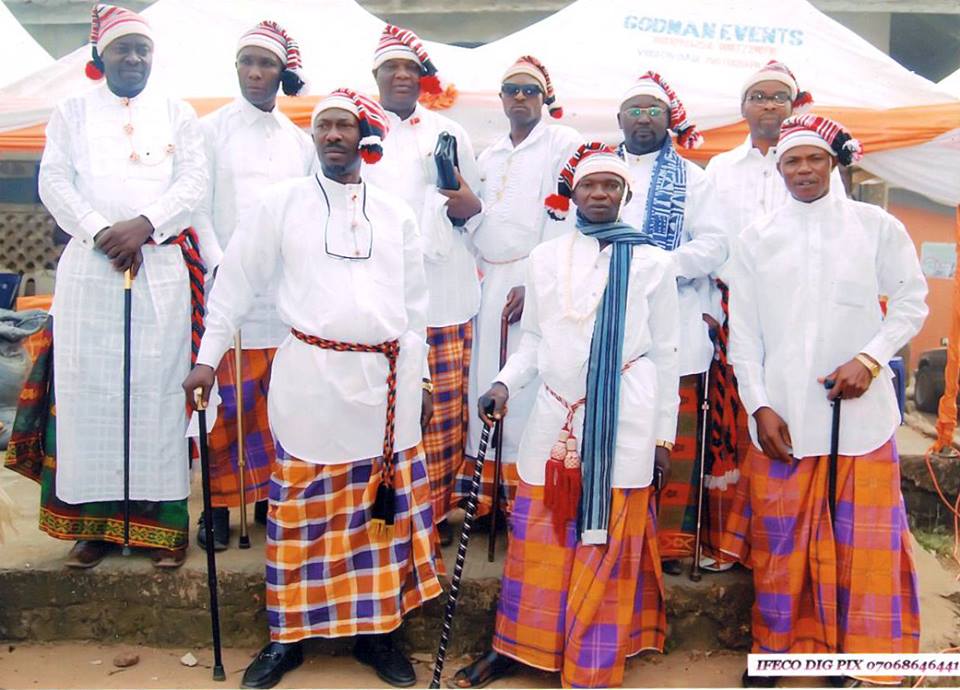
This is arguably the most important institution in Amaekpu (and Ohafia). It has emerged as the most important instrument in community governance and development. Amaekpu (and other villages in Ohafia) adopted the age grade system during its formative period as a matter of political, social and military expediency. People born within a three year period were grouped into one age grade and community service such as defense, policing, and leadership were assigned on the basis of age grades. The system imbibed the spirit of healthy competitiveness and camaraderie among members, which in turn fostered communal living.
 A child would often begin his initiation into the age grade system with his “igba nnunnu mbu” – killing his first bird, often regarded as “igbu ishi mbu” – signifying that the child has been weaned from his mother and is now fearless. Children born within the age bracket would be expected to do this within the same time frame.
At the same time, the girls within the same age bracket would be expected to experience their “igbuele” or “ino nhiha” – their first menstruation.
From then on, they would pass through different tests of maturity such as ability in farm work, wrestling, membership of secret societies such as “obon”, “akang”, and ékpé for the boys, and farm work, home making, crafts, and dance for the girls.
From age 18, the now adults would begin for organize themselves “ifiwe uke” into a more formal age grade system, where their skills in leadership, oratory, organization, strategies, warfare and other aspects of life would be honed. Leadership of these groups were based solely on personal achievements and the amount of respect the leader has garnered among his/her contemporaries. These groups will bear the names of older and more established age grades. It is common to hear names such as Atuegwu 2nd, Ifuruaku 2nd, Atuegwu 3rd, Ifuruaku 3rd, Atuegwu 4th, Ifuruaku 4th and so on in alternate order. Between age 40 – 50, the age grades would be expected to execute a community project, after which they are named by the EzieOgo. The age grades would continue to perform community service until ages 60 – 65, after which they execute one last project. Thereafter, the age grade would be ushered into retirement with pomp and pageantry as they celebrate their Otuomu ceremony.
The age-grades are overall divided into two wings (utuga uke): the Ngwa and Ibibio. Ngwa and Ibibio are two neighbours to the south of Ohafia, who were frequently at war. Their names are therefore used metaphorically here to indicate the rivalry between the two utuga uke wings. Age-grades are assigned alternately to either the Ngwa or the Ibibio wings, the competition among which produces a balance for the good of the community.