

Amaekpu is a community in Isiama Ohafia, Abia State, Nigeria. It is situated around latitude 5.651063° N and longitude 7.828251° E.

It is bounded in the south by Elu, in the east by Amangwu, in the north by Okagwe, and the north east by Edda. The exact population of Amaekpu is unclear but given the 2020 population projection of about 400,000 people for Ohafia from the 1991 population census and the polling data that shows Amaekpu as having about 15% of total polling units and polling votes in Ohafia, one would expect the population of Amaekpu to be about 61,000 inhabitants.
Amaekpu was one of the first three villages founded in Ohafia. Historically, Ohafia people led by Akpo Ukwu the great, are said to have migrated around the 14th century AD from Owan, a town in the ancient Benin Kingdom during the reign of Oba Ewuare 1. They traveled north along the Nun River and eventually settled with the Obolo people at Andoni where Akpo Ukwu died and went to rest with the ancestors. Under the leadership of Atita Akpo, the group left Andoni and migrated east towards Isieke Ibeku, from where they eventually left for the present day Ohafia. Along the way, Onyerubi Atita, Atita Akpo's son, could not continue with the group as his wife was in labour. He therefore, remained in Abam with his pregnant wife, while the group continued on the journey. Ezeama Atita, Onyerubi's brother led the Mben people until they settled at the present-day Elu, with stops at Udara Abuo and Ugwumgbo.
Nna Ofali Agwu by now very elderly, and members of his extended family were part of the group that participated in the migration. Nna Ofali, a contemporary of Ezema Atita, was one of the leaders that began the journey. He was a warrior, an astute leader, a man steeped in the culture and traditions of his people, a man that considered his kit and kin above everything else, and a revered dibia ukwu.
Most farmland at that time was in firm control of Umu Nnechi and Umu Aworo families, and this was a major source of concern for Nna Ofali Agwu, the leader of the Ibe Obobi family. To solve this, Nna Ajaiyi Aworo began his scouting missions and military incursions up north. Nna Ajaiayi Aworo was a son of the ruling Aworo family at Elu but grew up under the guidance of his maternal uncle Nna Ofali Agwu, the leader of their “Ikwu” the Ibe Obobi family. He was a hunter, a warrior, and a key military strategist of the Ohafia people. He was referred to as being swift footed due to his fearlessness and his deft ability to move and strike. The combination of this fearlessness, deftness, and sound strategic mind made Nna Ajaiyi Aworo a very respected and central rallying figure in most of expeditions by the Ohafia people.
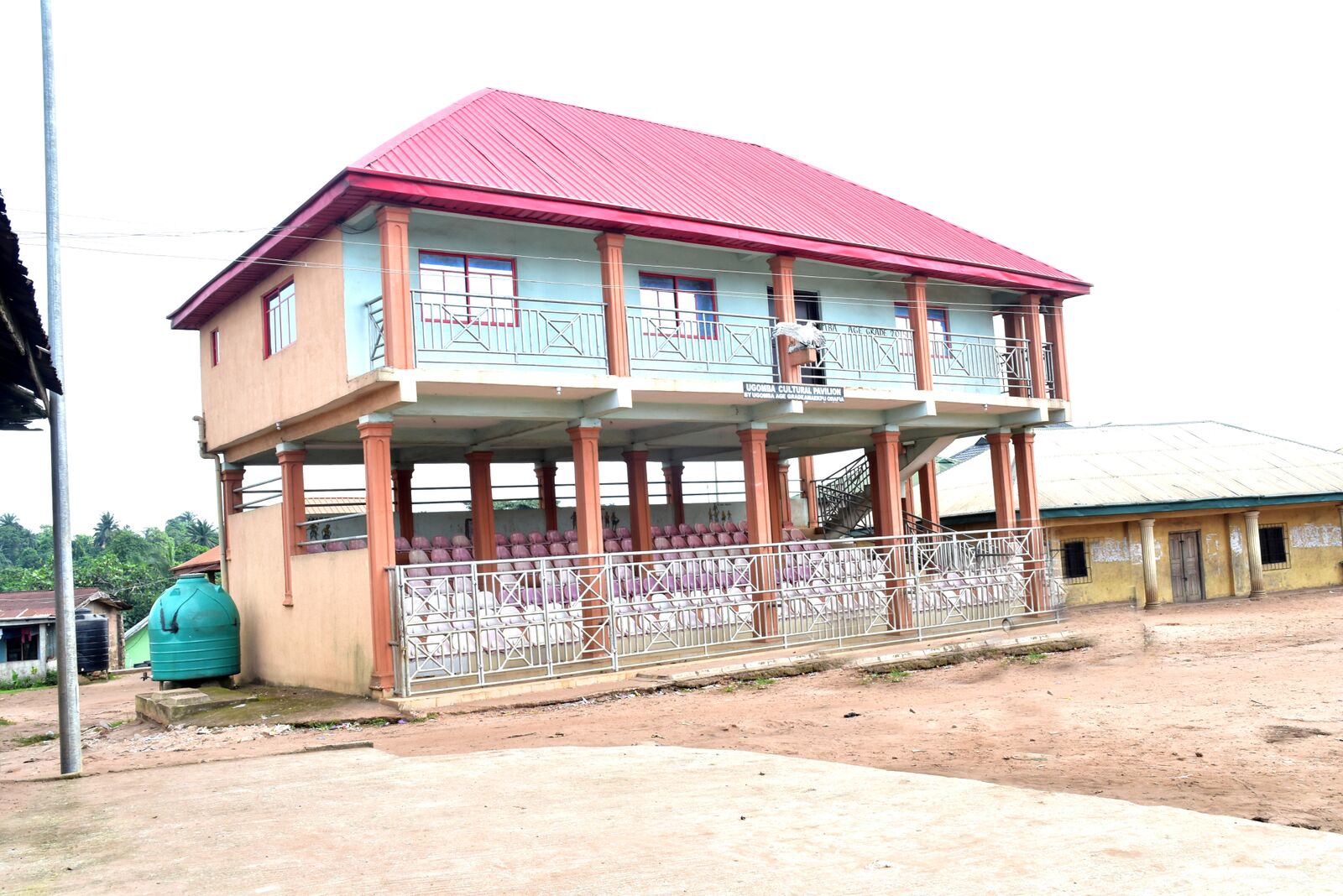 On one of the scouting missions, Nna Ajaiyi Aworo discovered an area that looked good for settlement. It had stable land, lush vegetation, very thick forests, animals for meat, and streams. The thick forests had lots of undergrowth of plants very wide leaves and he had to crawl through to access the forest – a process the locals call “Mkpukpu”, from where the name Amaekpu was derived. Furthermore, he discovered some parts of the area inhabited by a people, the Umu Amawa. He scouted them for days, focusing on their way of life to try to determine their strengths and weaknesses. He co-opted his younger cousin Ukpolugu Ofali, the then only surviving son of Nna Ofali Agwu, and a very brave and fearless young warrior, and together, they further scouted the Umu Amawa people, studied their life style, their settlement structure, and their military might. They discovered that they gathered on certain days in their village square for celebrations. During the celebrations, they would dance around in circles to the loud and melodious beat of the drum, Okenkwa (popularly referred to as Okerenkwa) with a log suspended by poles at the center. This time, they agreed would be the best time for attack. They consulted Nna Ofali Agwu who gave his blessings as well as the charms they would need to successfully complete the campaign.
They selected a few warriors from the family and carried out the stealth, incisive and successful attack that drove out Umu Amawa people. Evidence from this campaign still exists till present day: the log remains suspended at Obu Nde Ofali, the "Okerenkwa" is still at Nde Inyima (the resting place of Nna Ezichi, Ajaiyi Aworo’s son) and the machete used for this exploit at Nde Uka in Nde Edike.
After the conquest, the family, under the headship of Nna Ofali Agwu moved down to present day Nde Ofali, with initial stop just before Nde Okowu. Ajaiyi and Ukpolugu settled initially at present day Nde Odike to act at military shields to the new settlement from potential marauders, while Nna Ofali, stayed at present day Nde Ofali to provide spiritual leadership to the new settlement. Ajaiyi would later lead the warriors to clear the present day Nde Uche and part of Nde Ikuku for Nna Uche to set up another spiritual post, while Nnate Mbila, Nna Uche's protégé moved further down towards present day Nde Nnate to help fortify the then major entry point for marauders. With this military shield further fortified by the Nna Ukpai Eze, Ajaiyi moved up to Amaukwa to set up another strategic military shield and eventually started the new settlement.
With the new Amaekpu secured, Igbo Aja Odo moved towards present day Isi Osu from where he moved to settle at present day Nde Alum. While there with his nephew Nkpako Nkole, they noticed the potential for incursion by the Letu people, then residing present day Uku Amoba. With help from Nkpako Nkole and other Amaekpu warriors, they drove out the Letu people and Nkpako settled at present day Ndea Nkole to found the Utugauzo sub-section. Nkpako and Ofali would later meet at Ishi Osu to form a strategic bond that would unify and strengthen both settlements (Ime Ogo and Utugauzo) into one indivisible community – Amaekpu. By this arrangement, Ofali retained the spiritual headship of the union while Nkpako would be his partner. Both retained their Eze Ji (yam priest) duties – a key spiritual function for the people. This arrangement exists till today with Nde Ofali taking the head of any animal given to Nde Amaekpu, and Ndea Nkole taking the jaw and both sharing the Eze Ji duties.
This is by no means a comprehensive account the history of Amaekpu. It is intended to stimulate further research into our history. The exploits of these Amaekpu founders and heroes have been made into folklores and are retold from generation to generation. This is therefore only a brief rendition of the exploits of these founders and some of the people that came after them, who helped shape our community. These include, but not limited (in no particular order) to Ofali Agwu, Ajaiyi Aworo, Ukpolugu Ofali, Ukpai Eze, Uche, Nnate Mbila, Igbo Aja Odo, Nkpako Nkole, and Odike Obuba Ebi.
Attempts have been made by different scholars to document these and turn them into books. The hope is that the community leadership would at some point collate and document these into published work for posterity.